Tap & hold to zoom
Hold to zoom · Swipe to browse
/ 3
Seal · Uruk
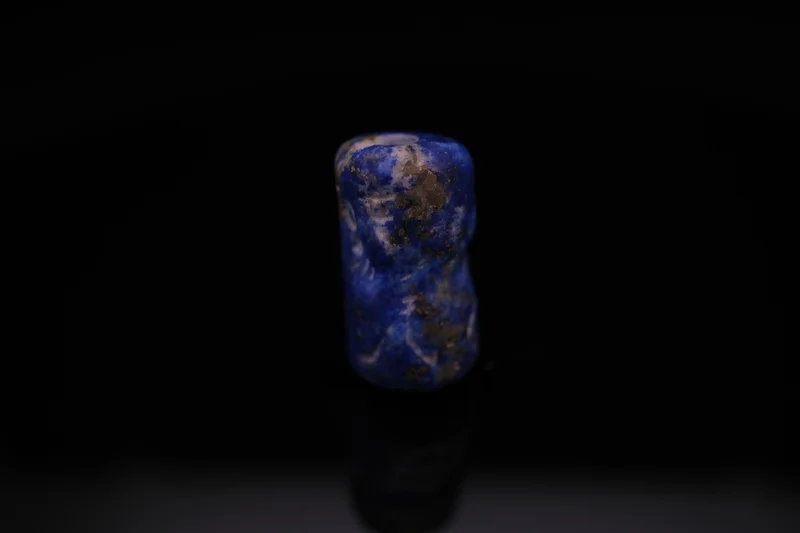
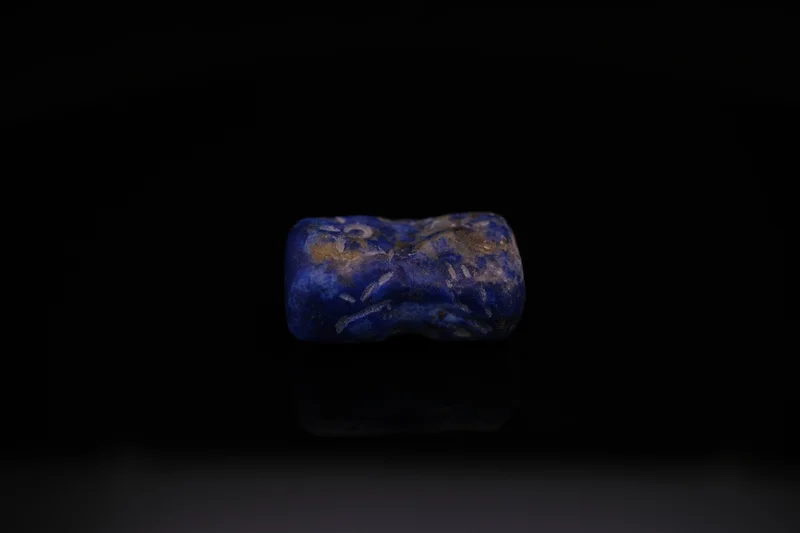
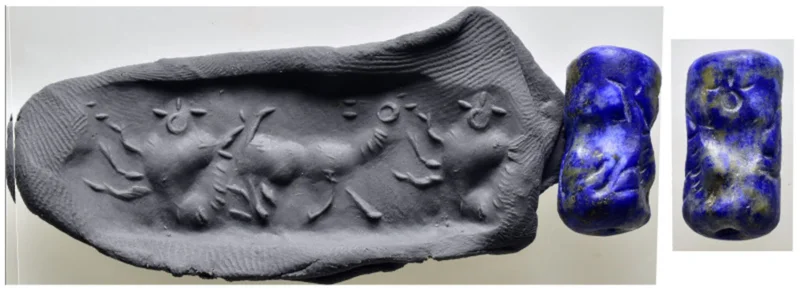
Uruk Period Lapis Lazuli Cylinder Seal
Lapis lazuli cylinder seal from the Uruk period depicting a ewe and ram. The deep blue stone shows characteristic gold pyrite flecks and white calcite inclusions. The carved scene shows two sheep in profile, a pastoral motif common in early Mesopotamian glyptic art reflecting the importance of animal husbandry to Sumerian society. Cylinder seals were rolled across wet clay to create continuous impressed bands, used to mark property, seal containers, and authenticate documents. The Uruk period represents one of the earliest phases of cylinder seal production in ancient Mesopotamia.
// Details
- Era
- c. 3400-3000 BCE
- Period
- Uruk
- Origin
- Mesopotamia
- Material
- lapis lazuli
- Weight
- 4.13g
- Dimensions
- 19.8mm
- Condition
- Good - surface wear, carving visible