Consider a cylinder seal carved in southern Mesopotamia around 3200 BCE. Over the next five thousand years, it would witness the rise and fall of Sumer, Akkad, Babylon, Assyria, and Persia. It would outlast Alexander’s empire and Rome’s. It would survive the Arab conquests, the Mongol invasions, and the Ottoman centuries. And somehow, against mathematics that should have reduced it to dust or slag, it would end up in a collector’s hand in the twenty-first century.
How?
The Mathematics of Destruction
The survival of any ancient object is statistically improbable. Every year an object exists, it faces risks: fire, flood, earthquake, war, theft, recycling, simple neglect. These risks compound over centuries.
If an object faces even a modest 0.5% annual risk of destruction, the mathematics are brutal:
After 1,000 years, roughly 0.7% of objects survive. After 2,000 years, that drops to 0.005%. After 5,000 years? Approximately two in every hundred million objects remain.
We have no precise numbers—we can’t count what no longer exists—but the evidence is stark:
Bronze sculpture: The ancient sources tell us that Lysippos, Alexander the Great’s court sculptor, created over 1,500 bronze statues. Not one survives. When the travel writer Pausanias visited Olympia in the 2nd century CE, he counted 69 bronze statues of Olympic victors from the 5th century BCE alone. Thirteen of their bases have been found. The statues themselves are gone.
Fewer than 200 bronze sculptures from the entire Hellenistic period survive today. Everything else was melted—for coins, cannons, cannonballs, or new sculptures commemorating whoever destroyed the old ones.
Ancient literature: Scholars estimate that roughly 80% of all Greek and Roman literature has been lost. The Library of Alexandria, at its peak holding perhaps 400,000 scrolls, suffered repeated catastrophes: Caesar’s fire in 48 BCE, Christian destruction of the Serapeum in 391 CE, neglect and dispersal over centuries. But even if that library had been perfectly preserved, most ancient texts would still be lost—because texts existed in limited copies, and papyrus doesn’t last.
Coins: Here the survival rate is better, because coins were produced in millions and made of durable metal. Yet even coins were systematically recycled. Old currency was melted when new emperors took power. Economic crises drove people to spend their savings. We have perhaps one coin in a thousand from antiquity—maybe less.
The Five Paths to Survival
Objects that survive five thousand years do so through specific mechanisms:
1. Burial (Intentional)
Grave goods represent a large proportion of surviving antiquities. The dead took their possessions with them, and the living generally left tombs alone—at least until tomb robbing became profitable. Egyptian tombs, Mesopotamian graves, Chinese burial complexes: these are time capsules, sealed and forgotten.
But intentional burial goes beyond graves. During times of crisis, people hid their valuables. Coin hoards are “bundles of treasure that people buried to protect their savings during times of great violence and political strife.” If the owner died or fled, the hoard stayed hidden—sometimes for millennia.
Researchers now use unrecovered coin hoards as a proxy for social instability. More hoards from a period mean more people who buried their wealth and never returned. The late Roman Republic shows this clearly: the clustering of hoards matches exactly when civil wars were culling the Roman populace.
2. Burial (Accidental)
Earthquakes collapse buildings. Rivers flood and deposit silt. Volcanic eruptions bury whole cities. These disasters are catastrophic for the living but preservative for their possessions.
Pompeii is the famous example, but the pattern repeats globally. Mud slides at Çatalhöyük preserved Neolithic remains. The desertification of Egypt’s climate preserved papyri that would have rotted in damper climates. The anaerobic muck at the bottom of harbors preserved wooden shipwrecks.
3. Continuous Use
Some objects survive because they never stopped being valuable. Gold jewelry gets melted and recast, but sometimes a piece is simply too beautiful to destroy. Gems pass from Roman to Byzantine to medieval to modern hands. Religious objects—icons, reliquaries, ceremonial vessels—are preserved by institutions that outlast empires.
4. Salvage and Shipwreck
The great bronze statues we do have mostly come from shipwrecks. The Riace Warriors, the Antikythera Youth, the Getty Bronze—all were lost at sea, probably while being transported as loot or merchandise, and preserved by cold, dark, oxygen-poor water.
It’s a beautiful paradox: disaster preserved what peace would have destroyed. A statue that made it safely to Rome would eventually have been melted. The one that sank survived.
5. Mundane Indestructibility
Some objects survive simply because they’re hard to destroy and not worth recycling. Pottery sherds have no resale value. Stone seals can’t be melted. Carved gems are too small to bother with.
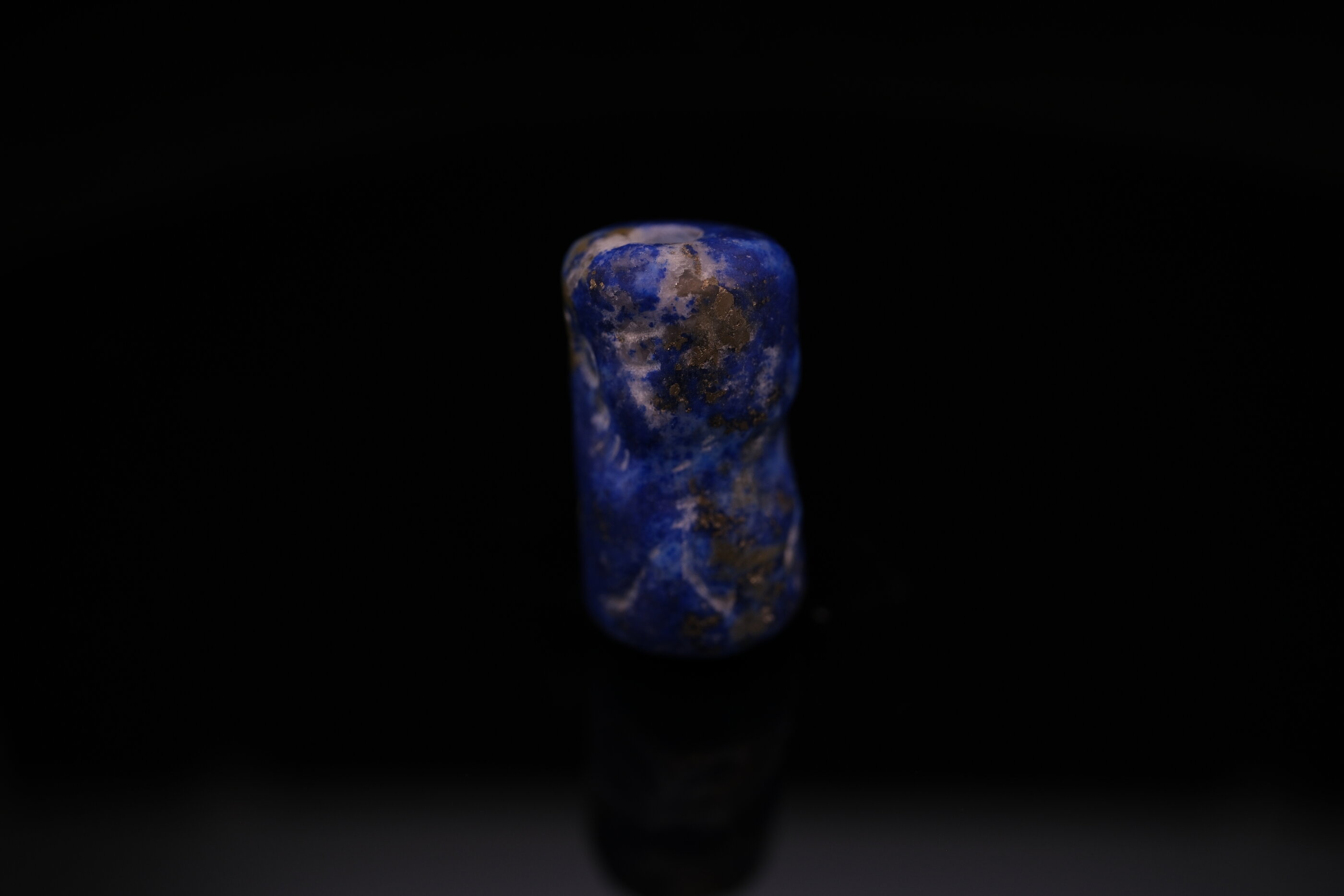
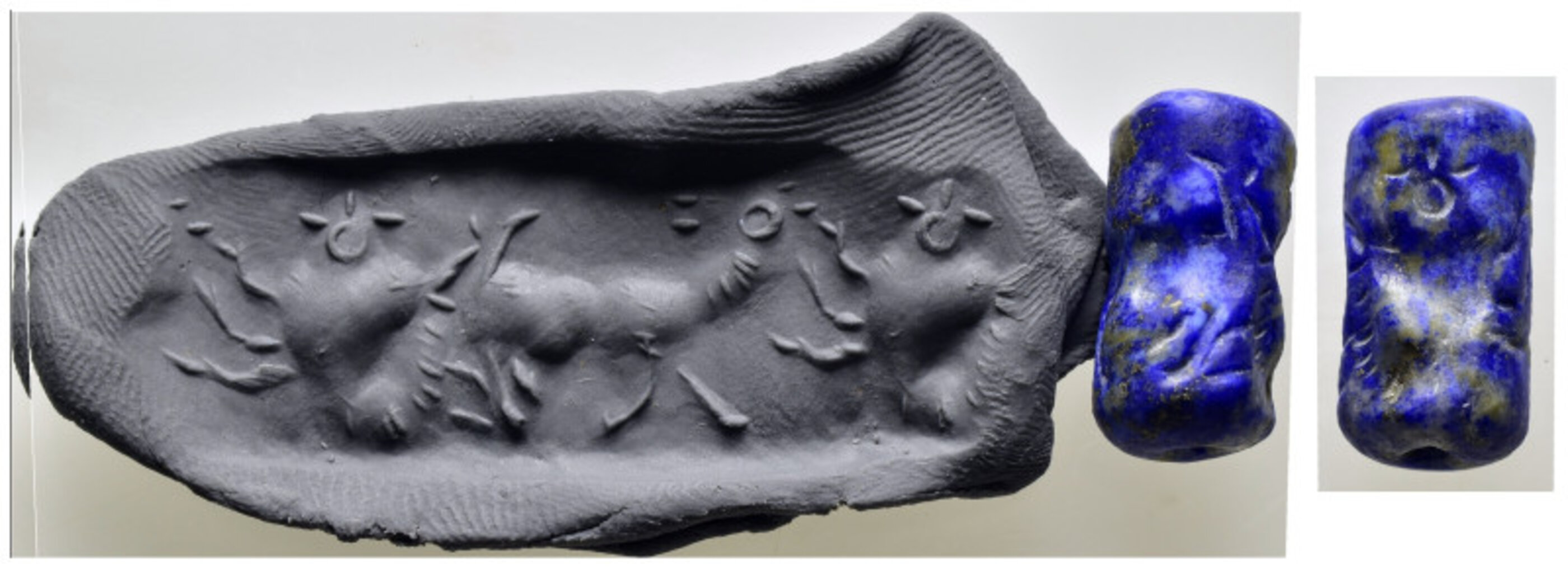
A cylinder seal like this survives because it’s small enough to lose, hard enough to last, and useless enough that nobody bothered to destroy it. It wasn’t worth stealing. It couldn’t be melted down. It was probably buried with its owner or simply dropped and forgotten, covered by the slow accumulation of dirt over millennia.
The Preservation Bias
Archaeologists speak of “preservation bias”: the ways that differential survival distorts our understanding of the past.
Stone tools dominate museum collections not because ancient people mainly used stone tools—they probably used wood, fiber, and leather far more—but because organic materials rot. We think of ancient sculpture as white marble, but most Greek statues were bronze (now melted) and the marble ones were painted (the paint has flaked away).
The objects in any collection represent the survivors of a brutal selection process. They are not a random sample of ancient material culture. They are what was durable enough, hidden enough, or forgotten enough to persist.
What It Means
Every ancient object in a museum or a private collection is a lottery winner. The odds against its survival were astronomical, and it beat them—usually through some combination of accident, disaster, and neglect.
This should change how we look at them. A coin from the reign of Marcus Aurelius isn’t just a portrait of a dead emperor. It’s one of perhaps a few thousand survivors from a mintage of millions. A scarab from New Kingdom Egypt isn’t just an amulet. It’s a message in a bottle that somehow bobbed across thirty-three centuries of chaos.
The cylinder seal at the top of this article was carved when writing was new, when the first cities were being invented, when the wheel was still a recent innovation. It passed through the hands of Sumerians, perhaps Akkadians, perhaps Babylonians. It survived the sack of cities we’ve forgotten the names of. And now it’s here.
Against all odds.