If you’ve ever wondered why Byzantine gold coins from the 11th century seem to come in two slightly different sizes, you’ve stumbled onto one of medieval numismatics’ most intriguing puzzles: the tetarteron.
The Problem
For centuries, the Byzantine solidus—later called the nomisma or histamenon—was the gold standard of Mediterranean trade. At 4.5 grams of nearly pure gold, it was trusted from Britain to India. “Good as a bezant,” merchants said, using the Western term for this Byzantine coin.
But sometime around 963 CE, Emperor Nikephoros II Phokas created a second gold coin. It looked almost identical to the histamenon: same imperial portrait, same religious imagery, same Greek inscriptions. Only one thing was different—it was lighter.
This new coin was called the tetarteron—roughly “reduced coin”—struck at around 4 grams versus the histamenon’s 4.5 grams. A small difference, but one that immediately complicated life for everyone who handled Byzantine money.
Why Create Two Gold Coins?
The precise reasoning remains debated, but likely motivations included:
Domestic vs. foreign trade — The full-weight histamenon maintained Byzantine prestige in international markets, while the lighter tetarteron sufficed for internal commerce where trust was easier to enforce.
Taxation by stealth — Paying soldiers and officials in tetartera while collecting taxes in histamena meant the treasury profited on every transaction.
Metal shortages — Gold supplies fluctuated. A lighter coin stretched available bullion further.
Market segmentation — Different coins for different price points, like having both fifty and hundred dollar bills.
Whatever the intention, the result was confusion.
Telling Them Apart
The problem was visible only on close inspection. Both coins featured Christ on one side and the emperor on the other. Both bore similar inscriptions. The tetarteron was slightly smaller in diameter and slightly lighter in weight—differences obvious on a balance scale but not to a quick glance.
By the 11th century, mints began making the distinction clearer:
- Histamena became slightly concave (scyphate), giving them a cup-like shape
- Tetartera remained flat
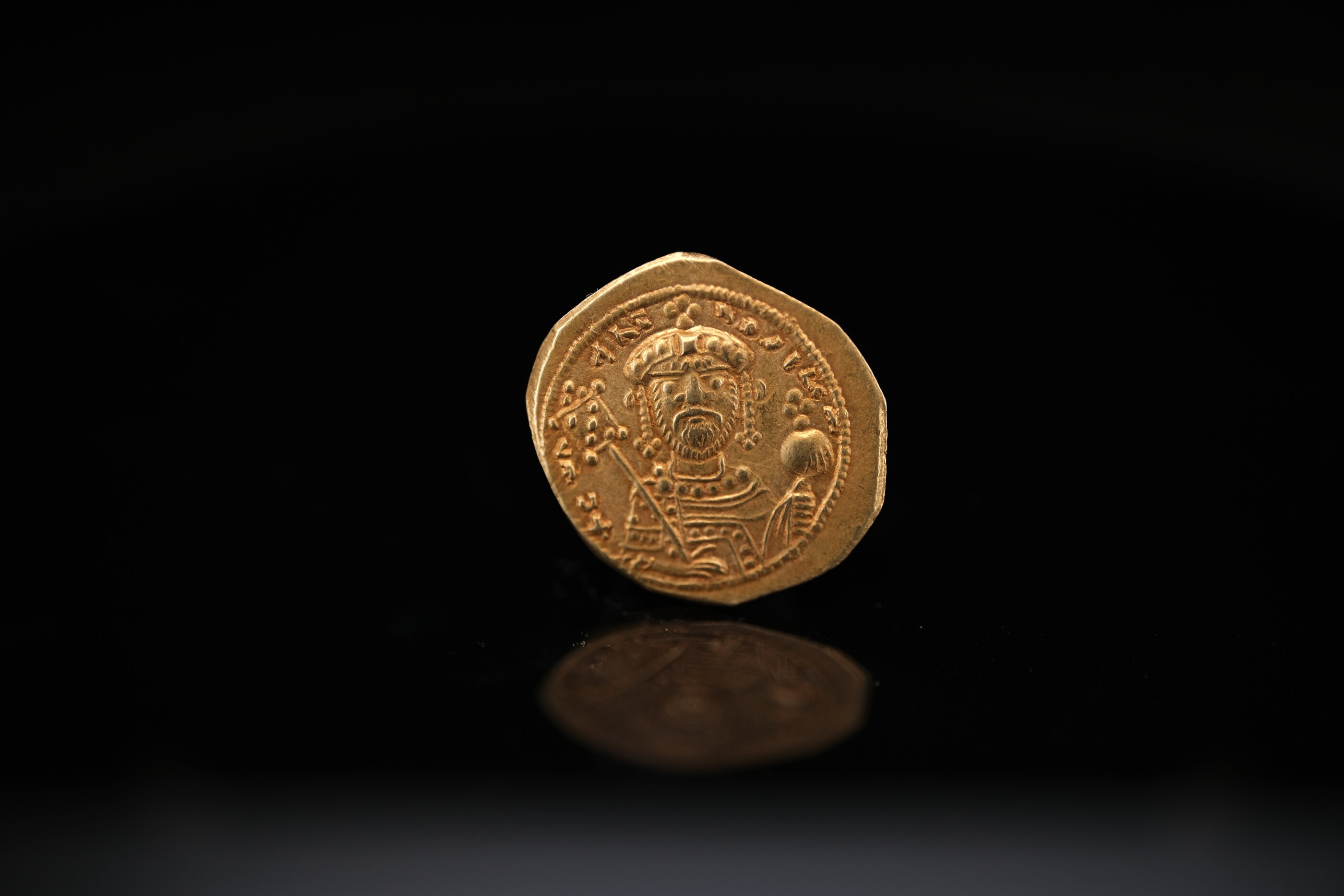
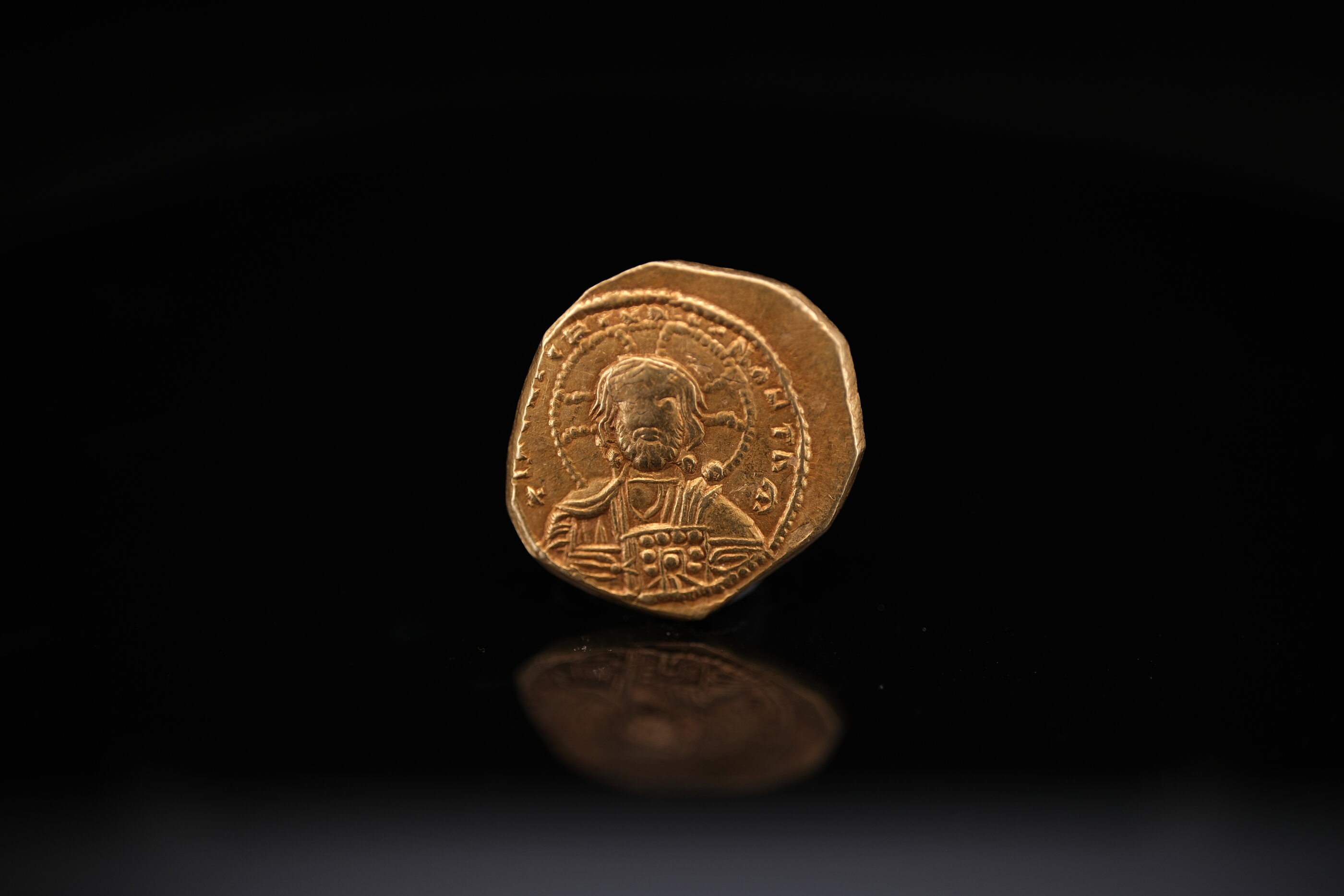
Our Constantine IX tetarteron shows this flat format, distinguishing it from the curved histamena of the same reign. But even this solution wasn’t universal or immediate, and earlier tetartera remain difficult to distinguish from their heavier siblings.
The Reign of Constantine IX
Constantine IX Monomachus (1042-1055) ruled during a period of relative prosperity but also of expensive military campaigns and lavish court spending. His coinage reflects this contradictory legacy: beautifully struck, but continuing the dual-standard system that gradually eroded confidence in Byzantine gold.
The obverse of our tetarteron shows Christ Pantokrator—“Christ the All-Ruler”—with the inscription “Jesus Christ, King of Kings” in Greek. This imagery emphasized the religious foundation of imperial authority: the emperor ruled as Christ’s earthly representative.
The reverse shows Constantine himself in full imperial regalia: crown with pendilia (hanging jewels), jeweled chlamys (military cloak), and the symbols of Christian rulership—the labarum (military standard bearing the Chi-Rho) and the globus cruciger (orb topped with cross).
The Beginning of the End
The tetarteron survived until the Latin conquest of Constantinople in 1204. But its creation marked the beginning of a long monetary decline. Where the solidus had been stable for seven centuries, the 11th century saw repeated debasements. By 1081, the gold content of Byzantine coins had fallen by nearly half.
The tetarteron wasn’t the cause—imperial overextension, military disasters, and civil wars bear that responsibility. But it was an early symptom of an empire learning that you can’t solve real problems with monetary tricks.
For collectors today, tetartera offer an affordable entry into Byzantine gold coinage. Their smaller size meant less gold, and their ambiguous status kept prices lower than equivalent histamena. Yet they tell the same stories: of emperors who saw themselves as Christ’s deputies, of an empire that clung to Roman traditions while inventing medieval ones, and of the eternal tension between fiscal discipline and political necessity.